Basement insulation in Beaumont CA - a lower floor that holds its temperature
Cold concrete walls or a lower room that never feels right? We check for dampness first, then insulate so the space stays comfortable.
How do you insulate a basement without trapping moisture?
Basement insulation in Beaumont puts an insulating layer on your foundation walls, usually on the inside, so the space below ground holds its temperature and stays quieter. We check those walls for moisture first, because what goes against the concrete decides whether the job helps or just hides a problem.
Most basement calls start with a lower room that stays cold, a musty smell or walls that feel clammy, and sometimes old batts down there have already gone soft and stained, which we'd take out first with insulation removal. The price mostly turns on how much wall there is, whether it's bare concrete or already finished, which material goes against it and whether moisture needs work before we start. The schedule turns on the same things, plus whether finished walls have to open up and whether a permit is involved. At the estimate I measure, look at your walls and put what I found and the plan in writing, so you have your own figure to work from.
How we do basement insulation, in order
I start at the walls, because moisture decides everything else. I look along the bottom of the concrete and around windows and pipes for damp spots, staining or a white crust, and if a wall is wet, we work out with you where it's coming from before any insulation goes on, since covering a wet wall only hides the trouble. Next our crew seals the gaps where pipes, wires and the top of the wall let air through, so the new insulation isn't fighting a draft. Then we pick what touches the concrete with that moisture check in mind, put it in and clean up.
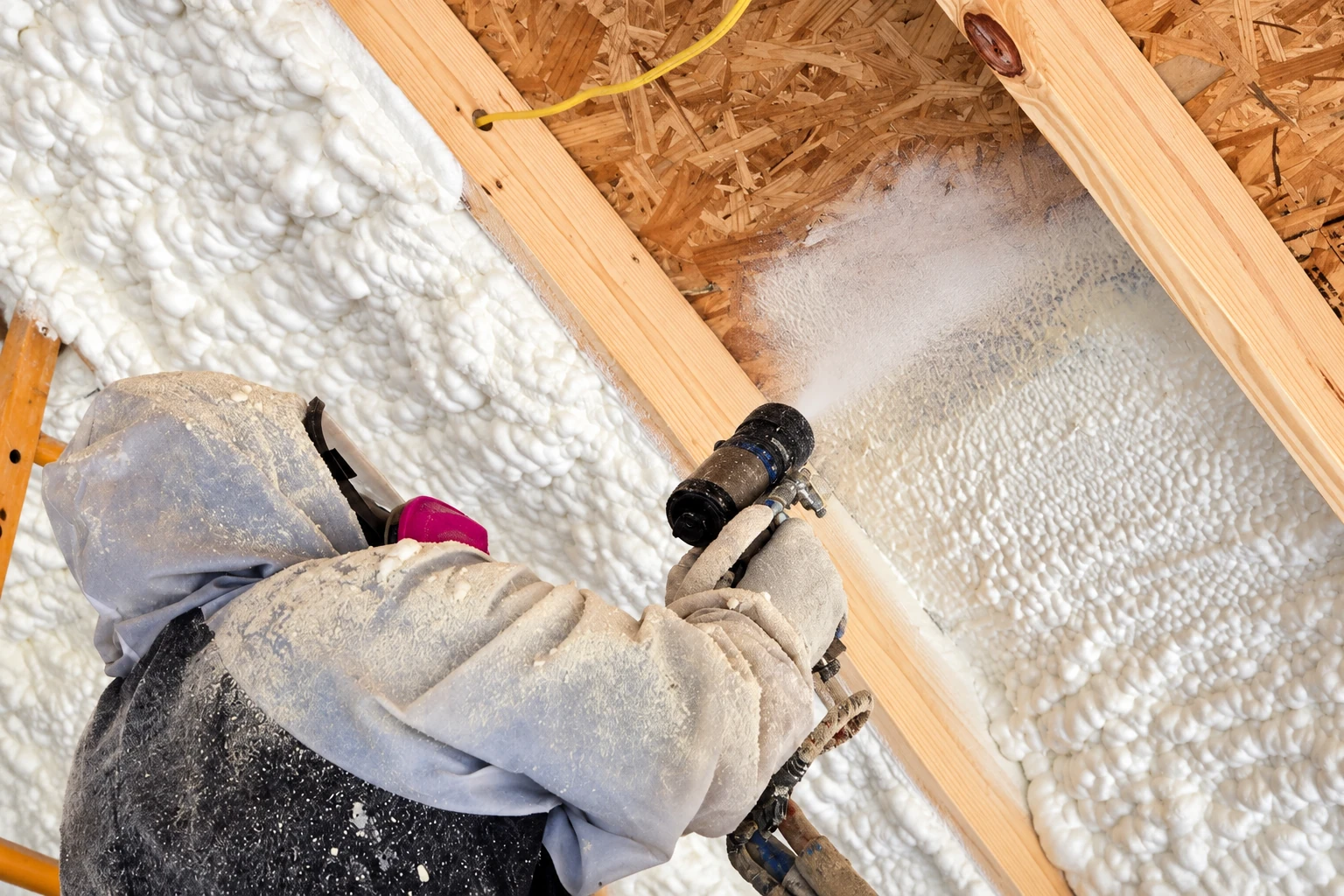
When the wall itself gets foam, it's usually closed-cell foam insulation, the dense kind that sets hard right on the concrete. Open-cell foam insulation is lighter and softer, so it fits better overhead between the basement and the floor above, where quieting noise matters more than the concrete does.
Foam sprayed on bare concrete
This suits unfinished basements and lower rooms you plan to finish later, because the foam goes straight on the wall in one layer and framing can go up in front of it. It also fills small cracks and gaps as it goes on, so there's less separate sealing to do.
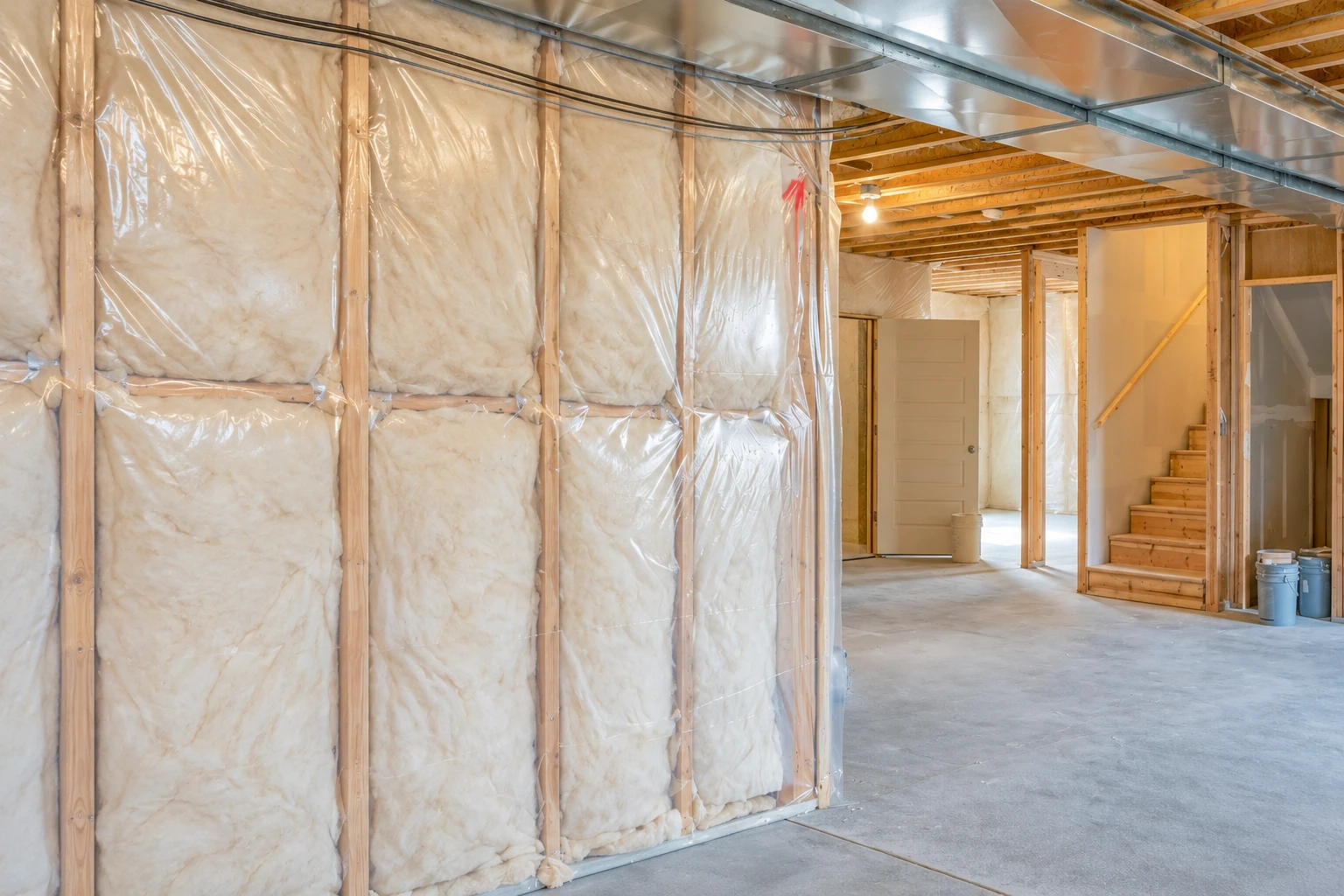
Insulating a room that's already finished
This suits a lower room with drywall already up, where tearing everything out isn't worth it. I open a small spot or two to see what's behind the wall before we decide, because I'd rather check than guess what an earlier owner put in there.
Basement insulation in Beaumont: permits and what we find
The City of Beaumont reviews permits for work inside the city, and it only takes submittals digitally through its permit and plan review page. I can't tell you from here whether your basement job needs one, so when it isn't clear I check with the city before we start, and when it does, we prepare the permit, file it and keep you posted. California's Energy Code also covers changes to existing homes, not just new ones, so I look at what the state asks of insulation going into your house as part of the plan.
Full basements aren't common around here, so most of what we insulate is a lower level built into a slope, a garage-level room or a partial basement under one end of the house, and we see the same on jobs in Cherry Valley and Calimesa. Those walls are often half buried and half above ground, so I check the buried side for dampness on its own.
What basement insulation looks like
Why call us for basement insulation
I write your estimate myself
I come out to every job and write the estimate myself, then our installers do the work and I check it before we wrap up. The person who looked at your walls is the one who signs off on the finished job.
Lived-in homes since 2020
I learned this trade on new houses going up around here, and in 2020 I started this business to work on homes people already live in. Old wiring, vents and past repairs come with a basement like yours, and I'd rather find them on the first visit than after insulation covers them.
A written record you keep
We write down what we found in your walls and what we did about it, and that copy stays with you. If you finish the room or sell the house later, you'll know exactly what's behind the drywall.
Licensed and fully insured
We're licensed and fully insured for the work our crew does in your house. That means you aren't the one carrying the risk while we're down there spraying foam or opening walls.
On a basement, the order of the work matters more than the material, so the moisture check always comes before we pick anything. Get in touch and I'll set a time to come look at your walls.
(951) 524-1237Get a written plan for your basement walls
We reply to every message within one business day, and I'll set a time to come out for a free on-site estimate with no pressure to book. I'll measure, check the walls for dampness and give you what I found and the plan in writing. Have the rough square footage and any damp spots you've noticed ready, and if yours is a crawl space or a partial lower room, just describe it in the form.
Basement insulation questions from Beaumont homeowners
Should I fix moisture in my basement before insulating the walls?
Yes, moisture comes first. Insulating a basement wall without dealing with dampness can hide the problem, and in some cases the insulation holds water in the wall and makes things worse. You get the most from the job by planning the moisture fix as part of the same project, not as an afterthought.
What is the best insulation for a damp basement wall?
Closed-cell spray foam gives the best moisture control of the options that go on the inside of a basement wall. Fiberglass or cellulose set against the wall can soak up a lot of water and stay damp. We choose what touches your concrete with that in mind.
How much does basement insulation cost in Beaumont, CA?
Insulating a basement usually costs about $4.40 to $6.40 per square foot across the US, which is a national figure and not our price. Your number depends on how much wall there is, which material goes on it, whether finished walls have to open and whether moisture needs work first. I measure at the estimate and put the plan in writing.
Who is licensed to install insulation in California?
Insulation contractors in California are licensed by the Contractors State License Board, under a classification for insulation and acoustical contractors. That license covers installing any kind of insulating material, from batts to spray foam.
Should I put plastic sheeting behind the drywall in my basement?
Usually not. Guidance on basements says plastic sheeting and foil-faced boards, which block moisture the most, can trap it when they sit on the room side of fiberglass. For below-ground walls, the same guidance points to Kraft-faced fiberglass batts, the paper-backed kind, or latex paint on the drywall instead.
How do I compare spray foam quotes for my basement?
Ask whether each price includes a fire barrier, a covering that goes over the foam, because in most basements foam insulation needs one. A quote without it can look cheaper and then grow once the covering is added. I'll note in the written plan whether your foam needs a covering and what goes over it.
Book a basement insulation estimate in Beaumont
We pick up seven days a week, early and late, at (951) 524-1237, or you can send the form any time.