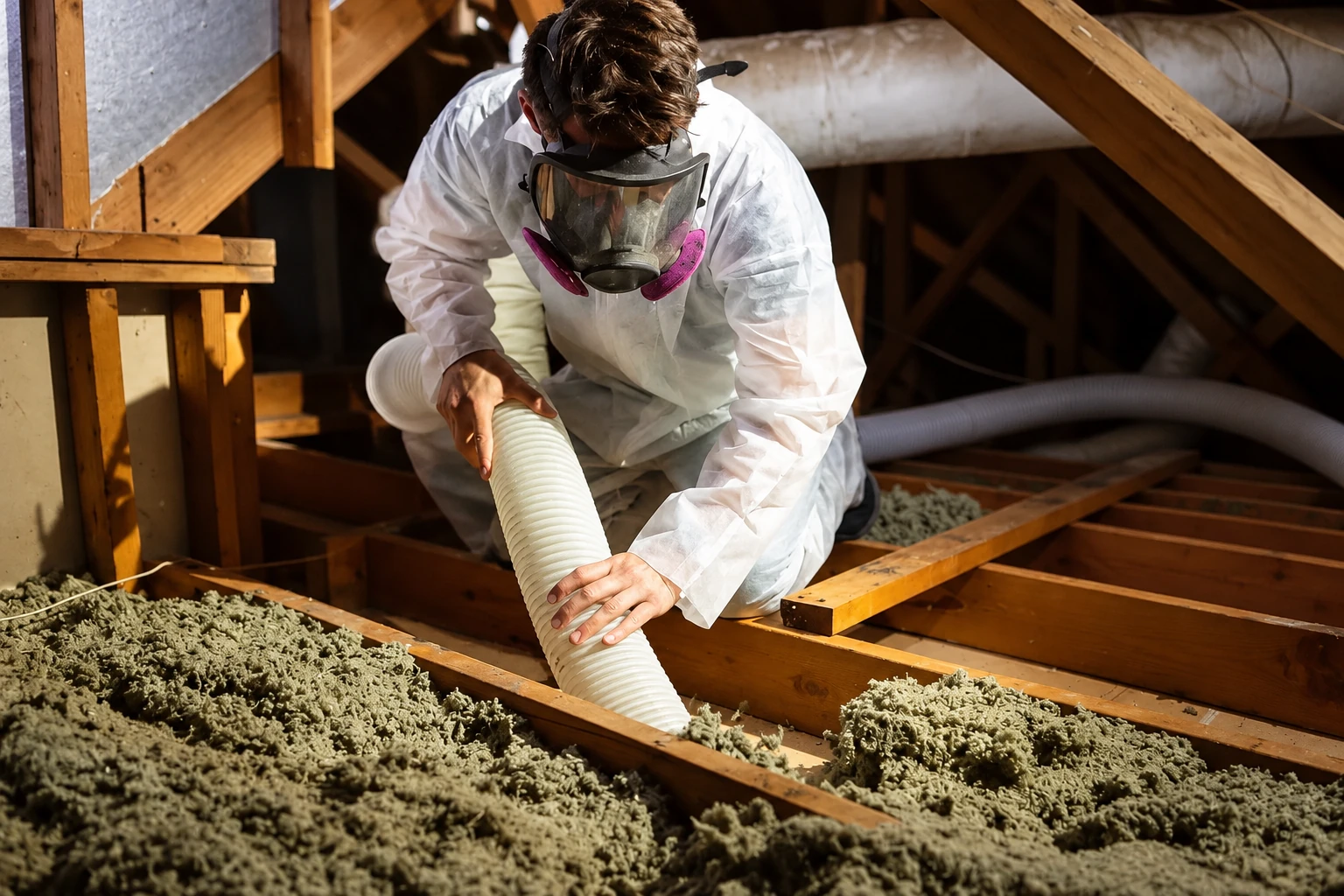
Blown-in insulation in Beaumont CA - even coverage out to the attic edges
Hot upstairs rooms and a thin layer in the attic? We seal the gaps first, then blow in an even blanket of fill.
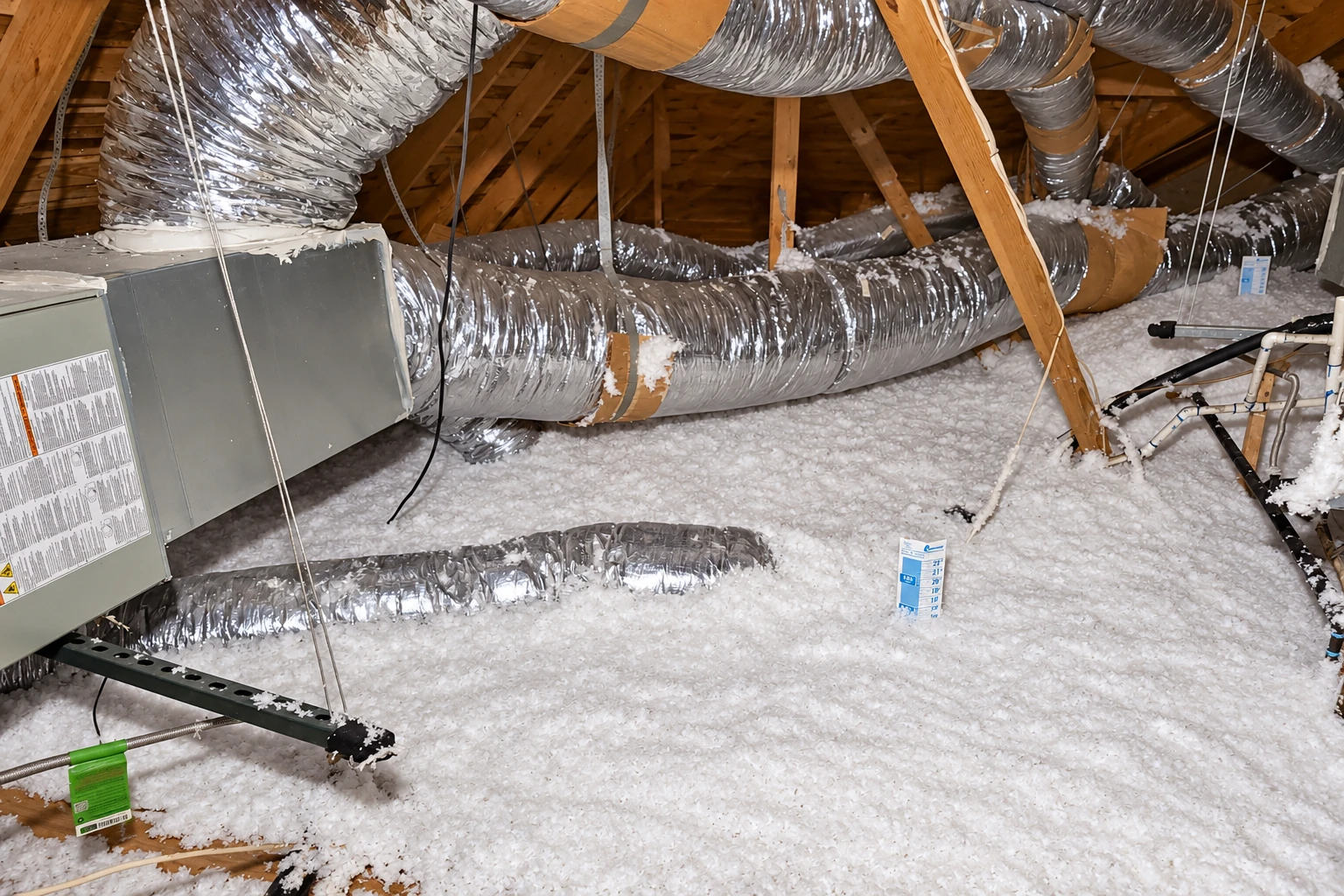
Is it worth topping up my attic with blown-in insulation?
Blown-in insulation is loose fill, usually cellulose or fiberglass, that we blow through a hose across your attic floor in Beaumont. It settles around joists and wires and slows the heat moving through your ceiling. Done in the right order, it makes the rooms under that attic easier to keep comfortable all year.
Most calls start with an upstairs that's hot by afternoon, a room over the garage nobody wants to sleep in, or a power bill that climbs every summer. When I get up there, the attic often has a few settled inches or almost nothing, which is common in older houses. The price moves with the size of the attic, how much is already there, how many gaps need sealing, and whether old material is wet or dirty enough that it has to come out first. The schedule turns on that same question, plus whether the job needs a permit. At the estimate I measure, look in the attic and give you what I found and the plan in writing. If drafts turn out to be the bigger issue, we can talk about attic air sealing too.
How we install blown-in insulation
Before any work is planned, I look for wet spots, droppings, can lights, wiring and old repairs, because a lived-in house hides things a new build doesn't and I'd rather find them now than after they're buried. On install day we seal the attic floor first, closing the gaps around lights, pipes, wires and the hatch, so the new insulation isn't fighting a draft from the rooms below. Next we set baffles at the eaves. These are short channels that hold the insulation back from the vents so air keeps moving through the attic. Then we blow the fill evenly across the whole ceiling and all the way out to the edges, where attics most often come up thin. Before we leave, we note what went in and where, so you have a record of it.
Blowing fresh fill over old insulation that's been soaked or is full of droppings just buries the problem. When I find that, we start with insulation removal and clear the attic first. If your comfort trouble goes past the attic, to cold floors or drafty walls, home insulation looks at the whole house.
Blown fiberglass for a light top-up
Fiberglass is light and doesn't hold water, so it fits well over an existing fiberglass layer or on an older ceiling where I don't want to add much weight. It settles less over the years than cellulose, though it takes a deeper layer to slow the same heat.
Blown cellulose for a tight fill
Cellulose is shredded paper treated to resist fire, and it packs densely around wires, pipes and odd framing, which helps in a crowded attic. It's heavier and settles some, so I check the ceiling and allow for that settling when we work out the depth.
Blown-in insulation rules and attics in Beaumont
For a single-family home, California's Energy Code says the total attic insulation, old plus new, has to meet the code. That's why I count what's already up there before working out how much to add. Whether your particular job needs a permit is something I check rather than guess. When it does, we prepare it, send it to the city's Building & Safety division, which takes permits and plans only by email, and keep you posted. If it isn't clear, we ask that office before we start.
We're based in Beaumont and work in many cities around it in Riverside and San Bernardino counties. The attics I see most are in older homes that start with a thin layer, and in newer tract homes where the builder's layer has settled or been pushed around by other trades. Long, hot summers bake both kinds, and we run into the same mix on jobs in Cherry Valley and Calimesa.
Blown-in attic work up close
Why call us for blown-in insulation
I look at every attic myself
I come out to look at every job and write the estimate myself. Our installers do the work, and I check it before we wrap up, so the person who planned your attic is the one who signs off on it.
Licensed and fully insured crew
We're licensed and fully insured. That matters when someone is working above your ceiling, stepping between joists and moving around your wiring.
Trained on houses built here
I learned this trade insulating new houses going up around here, and since 2020 we've worked on homes people already live in. That's how I know where a finished house hides wiring, vents and old repairs, and why I find them before anything covers them.
On an attic, doing things in the right order is what makes the new layer work. Call (951) 524-1237 or ask for an estimate, and I'll come take a look.
(951) 524-1237Get a written plan for your attic
We reply to every message within one business day and set a time for me to come out, measure and look in your attic. The quote is free and on site, with no pressure to book. If you know the house's age and roughly how many inches are up there now, add them to the form.
Blown-in insulation questions from Beaumont
How much does blown-in attic insulation cost near Riverside?
Attic insulation in the Riverside area usually costs about $1,500 to $5,000 per job. That's the going range around here, not our quote, and where a house lands depends on what I measure and find up there. I put your figure in writing after I've looked in the attic.
Is blown-in insulation better than batts for an attic?
For most attic floors, yes. An older federal fact sheet says blowing loose fill usually costs less than laying batts and covers better, though installed prices still vary. Loose fill settles around joists, wires and odd corners where a batt tends to leave gaps.
Who can install insulation in California, and does the contractor need a license?
California licenses insulation contractors under the C-2 Insulation and Acoustical class, which covers installing any insulating material for heat or sound control. The state lets an unlicensed person take small jobs up to $1,000, but only when the work needs no permit and that person employs no one. A crew working on a larger job, or one that needs a permit, should hold a state license.
What paperwork should I get after blown-in insulation goes in my attic?
You should get a written statement from the contractor that the insulation meets California's Energy Code, because the state requires that certification when insulation goes into an existing attic. National work guidance also has the installer post a dated, signed receipt in the attic listing the type, area covered, thickness and number of bags, so it's fair to ask for one. That sits alongside the record we leave you.
How long does blown-in insulation take, and do we have to leave the house?
You can usually stay home, because loose fill doesn't come with a re-entry time, a wait before you can go back inside, the way spray foam does. How long we're up there depends more on the sealing than on the blowing. I'll tell you what to expect when I give you the plan, and we lay covers from the hatch so the dust stays out of your rooms.
What is the best way to insulate a Beaumont attic, spray foam or blown-in?
For most attics, sealing the gaps and topping up with blown fill is the better buy. Spray foam costs more and seals air as it insulates, so I lean toward it when the ductwork runs through the attic. If that's your house, our spray foam insulation page explains how that job goes.
Book a blown-in insulation estimate for your attic
We pick up (951) 524-1237 weekdays from 6 AM to 11 PM and weekends from 8 AM to 9 PM, or send the form anytime.